Episode 1
Tomorrow's News
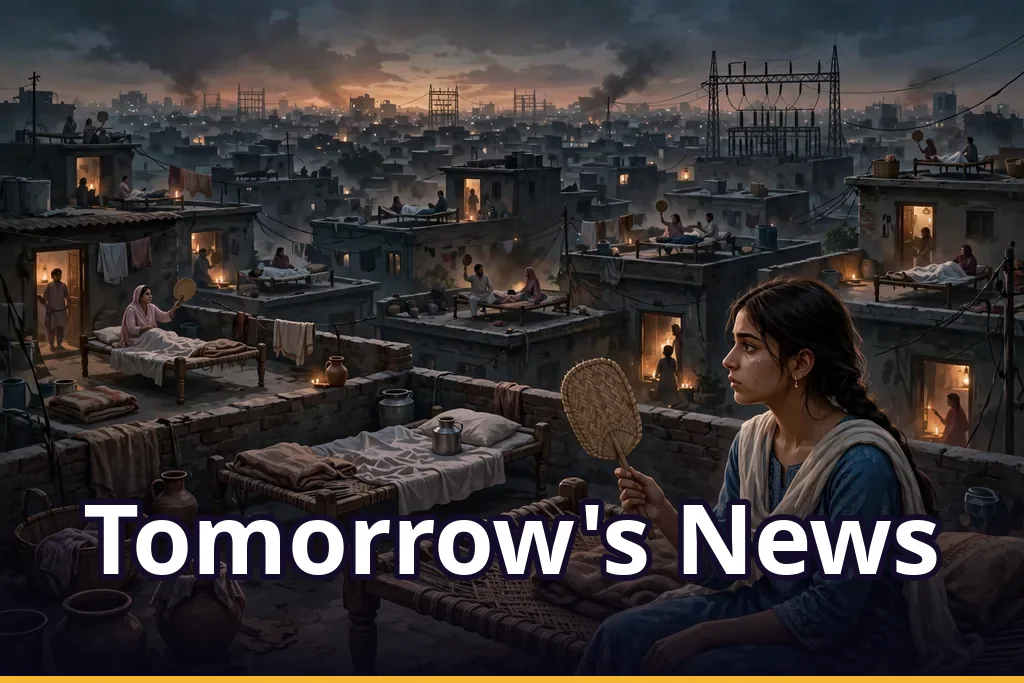
It was the week of heat when the city's electricity finally gave up.
Something had failed at the grid station, and the announcement came: no power for three days. Three days! No fans, no fridge, phones dying by the hour. Mahnoor's house was like every house in the lane — charpoys dragged up to the roof, hand-fans waving, and from every doorway the same sentence floating into the street: "May God see us through."
"Three days with no phone?" said Hashir, twelve years old, as if he had been handed a prison sentence. He was the family's gadget expert — taking things apart was his hobby. "I will literally die of boredom."
"You won't die, Hashir," said Zoya — the sixteen-year-old cousin from Karachi, visiting for the holidays and now trapped in the blackout with them — "you just have to live in your grandfather's times for three days."
That afternoon, dying of boredom himself, Hashir had pulled down the old transistor radio from the storeroom shelf, where it had sat untouched for years. Dada Kareem's radio. Dada had read the news at a radio station until he retired, and had repaired radios all his life. After he passed away, nobody had touched this one.
Hashir turned it over, twisted the knob — nothing. He popped open the back cover and laughed. "Look at this! The battery compartment is completely empty. And the wire's cut. This thing can never work." He put the radio back on the shelf.
That night, on the roof, everyone was asleep when Mahnoor's eyes opened. The silence was so deep it rang in her ears. The whole town — every house, every lane — was drowned in black darkness. Not one bulb glowed anywhere.
And then — from downstairs, from the direction of the storeroom shelf — came a sound. A crackle. Like an old road opening.
Mahnoor sat up. Hashir woke too. The three children crept downstairs. Dada's radio, on the shelf… was lit. Its needle was moving by itself, and out of it came a calm, measured voice — a young man's voice, in the tone of a newsreader:
**"These are tomorrow's headlines. First: tomorrow afternoon, a water tanker will overturn on the bypass. Second: the Imam Sahab's lost parrot will be found tomorrow, on the mosque's minaret. And third…"**
The voice paused.
**"…in Lane Number Four, tomorrow, something old will wake."**
Crackle. Silence. The radio's light went out.
The three of them stared at each other. Zoya whispered: "That voice… I have heard that voice somewhere. In the old wedding video. That's… that's Dada Abu's voice. When he was young."
With trembling hands Mahnoor took out her notebook — she didn't know why she was writing, only that she had to — and wrote all three headlines down, word for word. Then she said slowly: "Hashir, which lane is our house in?"
"Lane Number Four," said Hashir — and then his face went white. "Api… Lane Number Four is OUR lane."
Just then Mahnoor's eyes fell on the back of the radio — the cover Hashir had opened that afternoon and left hanging loose.
The battery compartment was still completely empty.